Sunday, 1 September 2019

The Hypermodernity of Individuals and Identity Reduced to Dividuals and Data

How PC Outrage and Cancel Culture actually work for Accelerationist Capital and Technology

by James Albert Barr


"Capital follows you when you dream. Time ceases to be linear, becomes chaotic, broken down to punctiform divisions. As production and distribution are restructured, so are nervous systems. To function effectively as a component of just-in-time production you must develop a capacity to respond to unforeseen events, you must learn to live in conditions of total instability, or 'precarity', as the ugly neologism has it. Periods of work alternate with periods of unemployment. Typically, you find yourself employed in a series of short-term jobs, unable to plan for the future." - Mark Fisher: "Capitalist Realism: Is There No Alternative?" (2009)

"With the internet as its nervous system, the world's connected cell-phones and sensors as its sense organs, and data centers as its brain, the 'whatever' will hear everything, see everything, and be everywhere at all times. the only rational word to describe that 'whatever', is 'god' - and the only way to influence a deity is through prayer and worship." - Anthony Levandoski on Wired magazine

"The mobile phone industry is the back-bone of the global brain that is being put together." - Rick Wiles

"You know what they say the modern version of Pascal's Wager is? Sucking up to as many Transhumanists as possible, just in case one of them turns into God." - Greg Egan: "Crystal Nights" (2009)


In a key early scene from 1999's zeitgeist defining cyberpunk film, The Matrix, we see Neo encountering Morpheus for the first time. Morpheus begins by asking Neo a very direct question:"Do you believe in fate?" Neo answers in the negative, stating that he "didn't like the idea that he wasn't in control of his life." Agreeing with Neo that he knew exactly what he meant, Morpheus goes on to tell Neo this: "Let me tell you why you are here. You're here because you know something. What you know you can't explain, but you feel it. You've felt it your entire life, that there's something wrong with the world. You don't know what it is, but it's there, like a splinter in your mind, driving you mad. It is this feeling that has brought you to me. Do you know what I'm talking about?" And of course Neo answers immediately with, "The Matrix".

Morpheus then proceeds to tell Neo what The Matrix is: "The Matrix is everywhere. It is all around us. Even now, in this very room. You can see it when you look out your window or when you turn on your television. You can feel it when you go to work. When you go to church. When you pay your taxes. It is the world that has been pulled over your eyes to blind you from the truth." Neo then asks the obvious, "What truth?", to which Morpheus ominously answers, "That you are a slave, Neo. Like everyone else you were born into bondage. Born into a prison that you cannot smell or taste or touch. A prison for your mind!"

The Matrix became a huge box-office hit in 1999, and shortly after, a pop-cultural sensation, literally blowing the minds of many of its fast-growing ardent fandom, and provoking much philosophical discussion and analysis - both astute and hare-brained - regarding the film and its profound implications. Others, however, simply saw it as a cool, slick piece of Hollywood entertainment and that's all; consumable and disposable and ultimately innocuous commercial fodder. The notion of being a "red pill person" or a "blue pill person" entered the social conscious and vernacular not long after 9/11 happened, interestingly enough.

Moreover, not long after social media exploded onto the cultural scene, as the Digital Age began to become more and more pervasive in the lives of all those who were spending more and more time on the internet after 2004, particularly "connecting" with people on a new social networking service called Facebook, downloading their music onto MP3's and iPods, and partaking in proliferating on-line gaming sites, the idea of what was once generally accepted as "consensus reality" began to breakdown and fragment, rendering it far more "subjective" than "objective". This was unwittingly, or not, facilitated by new stringent measures placed on many of the previous "freedoms" that Americans, especially, but also Canadians and Europeans inalienably enjoyed since after the Second World War. 

This, thanks solely to the fallout of September 11, 2001, with the introduction of the Patriot Act in Oct 2001 and the Homeland Security Act of November 2002, for instance, and an ever-widening division in the populace, politically, socially and culturally, especially between active Democrats/liberals and Republicans/conservatives. Commercial flying became an inculcated and standardized nightmare, because, at this point, anyone could be a terrorist threat to national security. A Kafkian presumption of guilt absorbed itself, inexorably, into the collective conscious and became "normalized".

This so-called sense of "guilt" was psychologically sublimated through the coordinated mantra of George W. Bush's, "You're either with us or against us", onto, and into, the minds of the American people, regarding the "necessary measures" implemented by the American government to crackdown on terrorism by flushing out all "evil doers" and the "axis of evil" who represented the very antithesis of America's "values and identity". For a little while, this fear-mongering rhetoric unified most Americans, regardless of political party affiliation. In other words, most everyone behaved and did their patriotically-charged due diligence, i.e. continued to "shop" and be consumers of freedom, like George W. encouraged them to be. 

However, when it looked as though Saddam Hussein did not, in fact, have "weapons of mass destruction", like W. and his right-hand men, Dick Cheney (who was really in charge) and Donald Rumsfeld, adamantly claimed he did, things began to sour in the House of Bush Jr. during his second term, thus clearing the way for an inevitable Democratic victory for Barack Obama in the 2008 presidential election. And what parasitically latched onto Obama's promise for "change" was that same pesky sense of "collective guilt" that W. exploited, from the right, during his presidency, only this time it morphed into "politically-correct guilt", from the left, with the sudden spread of identity politics, intersectionality, gender dysphoria, otherkin, systemic racism, easily triggered emotionalism, toxic masculinity and 4th-wave feminism. 

Initially, these highly politically-charged concepts were predominantly relegated to a university and college campus curriculum and syllabus, which were gaining more and more momentum since the early 90s, when postmodernism was entering its zenith, its final phase. And, all the while, Gen Xers (after the younger Boomers) were beginning to have kids, and those kids were being subjected to all kinds of "helicopter parenting", self-esteem counselling, Ritalin prescriptions, accruing the benefits of government-funded programs like No Child Left Behind, resulting in many a "participation trophy" being won, and bicycle helmet sales going through the roof.

Unbeknownst to said parents, and society at large, the vast majority of those kids, whom we know as Millennials, were developing a skewed sense of self, in their own world and the world in general; many of whom were growing up with an inflated, unrealistic, humorless and narcissistic sense of personal entitlement. A marked cross-section of them coming from economically privileged backgrounds and liberal environments (ironically, despite having "progressive parents" that smothered, or at least greatly limited, their early development and subjective experiences) began to go to university or college throughout the 2000s, with a highly susceptible sense for the power of political and philosophical suggestibility, unlike generations that came before it, who didn't have the convenient benefits of in-real-time social media dissemination of opinion and perception. 

And it was here that the Millennial generation, like a perfect, sociologically-determined storm, "intersected" with the aforementioned identity politics et al, which had become a pervasive fixture on university campuses over the last few decades, coincidentally enough. Like a kind of "politicorticulture", this Millennial generation seems as if it was, in supremely calculated fashion, grown from a crop of seeds into the current politically-charged harvest, and easily offended, electorate class that has apparently taken most of contemporary culture hostage, with many MSM outlets, liberal Hollywood and corporate institutions like Disney, Google, Twitter and Facebook happily towing the "woke" line as "gatekeepers", under the seeming guise of "social justice", cultural diversity and sexual/gender equality. But to what end, ultimately? It's not for a social justice utopia of safe-space equality for all, I can tell you that! Capital, I suspect, has another "Utopian vision" in its panopticonal, surveilling cross-hairs, or rather, algorithms.


Whatever the consequential ramifications of the secret Jekyll Island meeting in 1910, featuring the participation of several of the richest men in the world, at that time, resulting in the Federal Reserve Act of 1913, which initiated what would become the Haves and the Have-Nots being bridged by the newly developing "middle class"; John Maynard Keynes economics; a highly profitable, but devastating, Great War; and the notion of "the bewildered herd", "the phantom public", "cold war" and the cultural "stereotype", all of which were coined by "the Father of Modern Journalism", Walter Lippman, in his exceedingly influential books, "Public Opinion" (1922) and "The Phantom Public" (1925), and Edward Bernays' propaganda-cum-public relations innovations. 

It's crucial that what once was the banking system, "the machine", eventually became the system itself, the cybernetic program, "the matrix", when economic computation and digital data, networks of information coincided with 70s and 80s computer software development. Crony capitalism and Reaganomics were all the rage in the economic boom of the 80s, thanks in great part to the events of October 6, 1979, as we entered the post-Fordism era and forever changed working environments and conditions. As Mark Fisher elucidated in his important 2009 book, "Capitalist Realism: Is There No Alternative?":

"According to Marxist economist Christian Marazzi, the switch from Fordism to post-Fordism can be given a very specific date: October 6, 1979. It was on that date that the Federal Reserve increased interest rates by 20 points, preparing the way for 'supply-side economics' that would constitute the 'economic reality' in which we are now enmeshed. The rise in interest rates not only contained inflation, it made possible a new organization of the means of production and distribution.. The 'rigidity' of the Fordist production line gave way to a new 'flexibility', a word that will send chills of recognition down the spine of every worker today. This flexibility was defined by a deregulation of Capital and labor, with the workforce being casualized (with an increasing number of workers employed on a temporary basis), and outsourced." 

Perception is everything in our industrial-cum-digital world, especially for those in positions of power, economically and culturally speaking. And it has been necessary to manufacture and manoeuver perception(s) through an ever-increasingly complex society, culture and civilization. This immense process takes a lot of planning, calculating and execution, with many, many variables, contingencies and nuances to consider. It takes a great mind, or set of minds, to successfully maintain a specific perception of the world that is not only accepted, but welcomed, and even defended, by those who, under less manipulated conditions, would perhaps be aghast at the thought that they were being deliberately duped on a daily basis. But then again, it appears that some dispositions are seemingly predisposed to welcome an illusory life of servitude to an economic system, national identity and symbolic order, in general. Therein perhaps lies the rub, in terms of ever achieving a wholly unified populace collectively rejecting an eventually transparent world of manipulation and exploitation perpetrated by a few elite factions, who have traditionally inherited their powerful positions and riches.

The time-honored, human frailty known as fear remains the greatest weapon wielded against us. We are socially tribal by nature (despite SJW's attempting to redefine what "human nature" actually is now) and we all have within us the fear of being rejected by others and even being ostracized and excommunicated. This very fear is now being exploited by social justice agendas, victimhood mentality and identity politics in the corrosive form of "outrage and cancel culture", where "deplorables" (to use Hillary Clinton's cringe-inducing, sanctimonious nomenclature) are now being deplatformed, censored and banned outright on social media, doxxed, demonetized on You Tube and essentially publicly shamed wherever they attempt to initiate an indiscriminately open discussion and/or debate. 

Far-left identitarians appear to be willfully immune to any logic, reason and fact-based arguments, evidently taking a strategic page right out of radical community organizer, Saul Alinsky's, playbook for effective radical activism: "Conservatives have a tendency to try to win every debate with logic and recitations of facts which all too often fail to get the job done because emotions and mockery are often just as effective as logic." This remarkable sentence could very well be ground-zero for the birth of the contemporary "social justice warrior".

But the mere necessity for such immature and childish tactics belies any notion of tenable justification under the predication of what we understand, generally, to be a civil society of coexistence and cooperation. But this is why a generation of unqualified entitlement, socially stunted, knee-jerk emotionalism, and utter lack of self-awareness, was so crucial to develop and implement on the political/world stage. Indeed, we have verily entered the "clown world" and "upside-down" of confusion and lunacy where they can pass a law that allows a transgender male to have "the right" to have an abortion, regardless of not actually being biologically equipped with a uterus. This should be called out for what it is: mental illness, and "enabling mental illness" at that. 

But what was previously adjudicated as a mental illness, such as gender dysphoria, by the APA, has now been overturned and furthermore pushed onto the general public to be accepted and seamlessly incorporated into the culture and society at large. In Canada, Bill C-16 was passed by Parliament in 2016 to amend the Canadian Human Rights Act and Criminal Code which added gender expression and gender identity as "protected grounds" within the Act. The traditional gender roles of men and women are being categorically reversed, where young men are now appearing effeminate and easily emasculated (some are even wearing unironic t-shirts that say "Beta Cuck 4 Life"!), and conversely women are becoming more masculine and socially aggressive. Surely this is sheer madness on an increasingly mass scale!

The Digital Age, neoliberal late capitalism and the rampant acceleration of technology has evidently played a critical role in our present identity politics and culture war crisis. Yet another cultural phenomenon happening on a lesser scrutinized scale is what is called "otherkin". More and more people, typically under the age of forty, are declaring themselves as "other" than their birth species. For instance, some are now identifying as "wolfkin" or "bearkin" or "deerkin" or "serpentkin", or even alternative identities emanating from fantasy or myth, like "elfkin" or "dragonkin" or "wizardkin". There's even a subculture called "Furries", where they dress-up, akin to cosplayers, as their favorite, personally identified furry creature. And much like gender dysphoria people, otherkin people are clamoring for social acceptance and legal acknowledgement within society, safe from ridicule and discrimination. There is real evidence here to suggest that humanity, certainly in the West, is regressing dramatically from generally well-adjusted individuals and mature adults to increasingly depressive, mentally ill, infantalized, data-processed dividuals, as Gilles Deleuze proclaimed in his 1990 essay, "Postscript on the Societies of Control":

"The numerical language of control is made of codes that mark access to information, or reject it. We no longer find ourselves dealing with the mass/individual pair. Individuals have become 'dividuals' and masses, samples, data, markets, or 'banks'. Perhaps it is money that expresses the distinction between the two societies best, since discipline (societies) always referred back to minted money that locks gold as numerical standard, while control (societies) relates to floating rates of exchange, modulated according to a rate established by a set of standard currencies. The old monetary mole is the animal of the space of enclosure, but the serpent is that of the societies of control. We have passed from one animal to the other, from the mole to the serpent, in the system under which we live, but also in our manner of living and in our relations with others. The disciplinary man was a continuous producer of energy, but the man of control is undulatory, in orbit, in a continuous network. Everywhere surfing has already replaced the older sports."

We are systematically being reduced and divided into algorithmic bits and bytes, mere information devoid of any real knowledge and "authentic being" in the Heideggerian sense. As the father of cybernetics, Norbert Wiener, said, "Information is information, not matter or energy." Our ontological experience is now an on-line avatar drained of nearly all and any identifiable visceral humanity, wherever you happen to be located, seeing as you are now ubiquitously connected to the matrix/hypermodern electronic exosphere enclosed around the entire globe, having a smart phone on your so-called "person" at all times. This is why so many "people" feel so disconnected with others, despite how many social media sites they frequent daily, and the moment to moment texts sent and received. As Peter Sloterdijk concluded, we are "foam", separate little bubbled worlds rubbing up against other bubbled worlds, only connected by the electronic membrane of the matrix that constitutes our "world interior". Wherever we are, it is. Mark Fisher called it Capitalist Realism. It is all around us, the very air we breathe. This is now our Hypermodern "reality".


According to John David Ebert and Brian Francis Culkin, in their collaborative new book, "Hypermodernity and the End of the World", postmodernism officially ended on September 11, 2001 and hypermodernity began, at least politically, where as culturally/technologically, it began in 1995 with the commercial advent of the internet when Windows 95 was released. I'm inclined to agree with the 9/11 commencement, as postmodernism was still very much a thing right up to the millennium, and at least residually for the first few years of the 21st century, ultimately dissipating completely by the time of the 2008 economic crash. We've been wholly in a hypermodern state ever since. One of the main differences between postmodernity and hypermodernity, again, according to Ebert and Culkin, is that the media of postmodernity had all been analogue, such as records, cassette tapes, photographs, magazines, celluloid. And the media of hypermodernity is exclusively digital:

"With the satellization of the Exosphere, the analogue telephone became transformed into the cell phone and later the smart phone, which jacked the individual into the World Interior from wherever on the planet he or she happened to be located. One didn't have to go anywhere to be included in the new Hypermodern World Interior. All analogue photographs could be dissolved from their nitrate surfaces and melted into cyberspace directly from the brain as the camera became an appendage of the World Interior. Vinyl records were dissolved and liquefied, and celluloid films transformed into bytes that obsolesced the movie projector. All analogue media were liquefied, dissolved and fed into the new matrix."

The Hypermodern Digital Age has utterly liquefied most everything within its all-encompassing mainframe, rendering it all as free-flowing information/data and pure Capital. It's no wonder so many "dividuals" are confusingly identifying with just about anything their unhinged narcissism becomes attracted to. In a recent study conducted by Idaho State University and College of the Canyons and Center for Positive Sexuality in Los Angeles, a paper entitled, "Do We Practice What We Preach? Real Vampires' Fear of Coming Out of the Coffin to Social Workers and Helping Professionals", a study that primarily focused on the growing "otherkin" and alternative identity community of "real vampires" - I kid you not - the researchers opined, "...it seems that rapid advances in technology provide a social environment conducive to the development of unique and unconventional identities. We should not be surprised to see a proliferation of nontraditional identities in the future."

They weren't kidding, in a manner of speaking, ironically. This definite proliferation of innumerable identities, regardless of the traditional parameters of reality, healthy maturity and political conviction, has been symptomatic of what has happened to language itself, that which ultimately constitutes the world, the Symbolic Order, in the Lacanian sense. Language, and its users, have unwittingly deteriorated unto semiotic chaos and excess, where in Hypermodernity, "too much is never enough". And this "language in chaos" appears to be affecting everyone, regardless of race, gender, politics, cultural identity, beliefs, ethics and values. Neoliberal late capitalism may very well be dragging us all towards the Singularity, like Elon Musk has been incessantly warning us about, where all meaningful differences will be rendered obsolete, as well as any discernible humanity, thus ushering in what Vernor Vinge predicted back in 1993: the post-human age. Is this what the far-left identitarians and SJW's are unrelentingly, and ultimately, fighting for? Because this is where we're headed, folks.


Tuesday, 23 July 2019

Zone II (a 21st century poem)


*Here's a long poem I originally wrote in 2002. It is a sequel, of sorts, to French Symbolist poet, Guillaume Apollinaire's famous 1909 modernist poem, Zone, which addressed the many modern and technological changes that were happening early in the 20th century, including the Cubist and Futurist art movements of that period. My poem takes Apollinaire's themes and brings them into the digital and virtual world that we now find ourselves, not so much inhabiting, but wholly immersed in, or even subsumed by here in the 21st century. I've made a few necessary revisions, while deliberately keeping certain freshly millennial references intact, for contextual purposes, to give the poem a more contemporaneous presentation.

by James Albert Barr


                                   ZONE II


The spent postmodern world is weary of its own time.

Corporate CEO your bloc of shareholders are exsanguinating the fiber-optic vein.

You haven't had enough of this consuming in our late capitalist mode.

Here even the street-people resort to some basic, dishonest strategy
To weasel a buck or two from less apathetic strollers
Inevitably making their way towards dying malls like 19th century arcades.

In all the Western hemisphere you are not exhausted O credit-rate!
The most lucratively informed is you Mr. I. Cloud
And you whom the Window's share is beyond shame to keep back
From entering an ethics-room and confessing your torts in the morning
You scan the skylines the headlines the company's earnings
The public notices you singing out
Here's the morning news and for pros you have inside information
We've bull-shit web-rags saturated with lame articles
Partisan pieces, biased bile and a gazillion fucking ads.

Just tonight I saw a T.V. news report of a teen beaten to death I forgot their name
So young and green a dead weed in the sun
Competitive networks and nondescript reporters
From Sunday morning to Saturday night run "the story" a dozen times a day
Several times at night a police siren wails out
A fuming funnel slays the air at noon
The buzzwords the billboards the malls (so dead)
The pay-stubs the credit-notices nagging
I loathe the snark of these commercial streets
Located everywhere between the Aurora Borealis and the Aurora Australis
There's more items per street and you're only here still. 

Your image dresses you in Nike and the Gap
You're an homogeneous boy and like your generic buddies
You want nothing less than parties in perpetuity
It's four o'clock the beer is all gone vomit on the floor you crawl
Into someone's room
You sprawl all morning long in a mess of pheromones.

With the internal pathetic depth of automatons
Absorbed incessantly by the VR graphics of PlayStation and Xbox
This is the stale air that we all now breath
The cyberspace the white hare now flees to within
The pimpled-face son of the mother shopping
The pixels curvy-slick all over with ani-babes
The triple action of blood and gore
The 5.0 starter kit
"God" who designs on Friday and plays on Sunday
"You" who manoeuvres better than any other player
And holds the current record for the most levels accomplished
Public star in your eye - from your cloud
Twenty-first century job knows its place
And morphs into a byte this century downloads into the hard-drive
Jacking-in like Dixie.

The AI's in their programs compute to evolution and whir
They call it a virtual organism of simulating in Game of Life
They explain if this is Artificial Life let's call it "genuine life of different stuff"
The ROM jet across the beaming screen
Microsoft Internet Multimedia Wintermute of Neuromancer
Hugo about this first artilect.

From day to day they step inside of cubicles to transfer to the source
Those promotions rescinding externally at the Congregation of the Ghost
The plain hands at Mass supplicate for things instead
See the shelves are crammed with merchandise of innumerable means
In stocked aisles the brand-names come the labels, the Logos has gone
Designers from Italy and styles aplenty and former mallrats
The "new-line" celebrated by consumers and economists
Glitters with the spirit of Adam (Smith) the first head in the market
The Dow Jones fluctuates from the board with a great weight
This for America comes the tall order.

From Japan the super-charged animation
I have only one wish to fly to Paris
Where are the poets so igneously-spirited
Inspired by the Symbolists and the new iconoclasts
The Phoenix that self-regenerates illuminates mistakes
Hid beneath the veil so desperately clasped by the ornery
Their minds repeat the previous fates
Arrange all to be sustained at bottom with their (de)vices
American dreams and Asian means all resign
To fantasize within the virtual machine.

We are accelerating in 3D all alone in a game-program
Soccer fans are cheering in passing cars as you go
Reality's shadow churns you in the viscera
Ask if you can be real ever again
If you're living in the old world you better exit the arena
You're beside yourself when you see yourself grieving
You swear at yourself man your loathing burns like infernally
The parts that you hate intensify a life with no relief
This picture is preserved in dusty digital albums
But you can never allow yourself the courage to admit it.

Today you're chatting in a coffee-shop the employed are on Prozac
This is and I do want to remember it this is the twilight of humanism.

Inured to her fallen towers New York has shown them at Ground Zero
The wound of a national heart had enraged them from all States
We were desensitized by the re-televised terror planes
And this image that owes much to biased purviews keeps me up at night
It remains ubiquitously around you this tragic image that has festered.

Now we are beyond the new millennium
Under the auspices of technology progressing all day long
You can escape into it with some choice friends of yours
One's from Department G one's from Division 35 there are three from DeVry
I am unnerved by the easy proliferation of techno-romantics
Who through a lobotomized memory feel safe to savor artificial worlds.

You are in a chat-room somewhere in the Net
You are bold with anonymity at your finger-tips
And instead of describing your true self
You reflect the avatar lodged deep in the recesses of desire.

In dreams you see yourself in bondage at the gates of Saint X
You awoke so bemused by the vanishing vestiges there-in
You felt like Neo struck dumb by the threshold
The numbers on the digital clock made zero sense
But you revert back into the linear world
And getting up to CNN hearing the morning news
The decaf coffee from that catchy jingle
Commuting back to the boroughs along the mainline
You're at home watching Survivor on a Japanese big-screen.

You're in Fort Lauderdale with a buddy who thinks you're cool but he's self-interested
He wants to pursue a Californian sophomore
Then register adjacent rooms and lounge by the pool playing eyes with one another
You'll remember it well the three days spent there and resent him for having scored.

You're at work before the assessing management
Like a disposable employee you sweat in uniform
Have you appeased your employers enough to avoid being down-sized
Before taking into account the receding sales and competitive take-overs looming?
At thirty-two you have suffered for business and company
You have lived beyond your means and have lost a third quarter of stock
I am not secure with these hands and all the while you could not see your own
Because of this because of that I dread because of all the things rendered oblivious to you.

Lies full of fears you instill those artless students
They trust in democracy they pay the schools to prepare a future
Their fees fill the budgets of the campus repute
They believe in the tradition like the graduates before them
They fully expect to get rich on the market floor
And ascend to the corporate perch then kick the ladder away.

One company exports its winning products as efficiently as they exploit your labor
Their guilt and your bonus are equally disavowed
A fraction of those students remain there and climb dutifully
In the division of advertising or the department of public relations
I always see the result obscuring the sky on the streets
They are like watchmen they rarely leave the terminal
Even while in transit above all use cell-phones and wear head-phones
Drained of soul they kick-back with a remote, remote from self-awareness.

In 2002
You sat before the monitor in a cyber-bar
Engaged in a five-hour session among the peripheral on-line surfers.

You were a knight in an unreal time.

These people are not distressed but they have their problems nonetheless
Some of them are lost in an illusory realm even among the eldest
See these children of a forgotten time.

Those hands I can see they are unsteady and callused
I have immense empathy for the feared thoughts in all minds.

For the impoverished person with no fertile future I ponder my own now.

We are alone Winter is coming
The lostmen are stamping their shodless feet at the traffic-lights.

Sight wakes night like a frost medieval
It's a fearless jester or a fearful cardinal
You take those pills that belie a fractured reality
Your reality you take down like an enemy
You yell upwards to the heavens and go home unheard
To sleep with your illusions from Hollywood and Las Vegas
They are creeds in a distorted form creeds of wanted norm
They are the costly creeds of longings denied.

Closing time   Closing time

Sum (of all)  cut  losses...


Thursday, 4 July 2019

Is This Really the End of Mad Magazine?

Only in a "Clown World" Political Climate of Leftist Insanity does an Irreverently Liberal Publication like Mad Magazine Ironically meet its Fate!

by James Albert Barr 


Holy shit! Coincidentally, being that I included, with a cheeky little post on Facebook recently, a classic pic of Mad Magazine's iconic mascot, Alfred E. Neuman, I literally JUST heard that Mad Magazine, itself, will cease publication and disappear from newsstands by the end of this year, thus ending their 67 year long run!

I first discovered Mad Magazine way back in grade 5 at my elementary school. I read several issues that were consistently available among the variety of magazines in my home-room class, and read it, off and on, throughout my adolescence. The importance of Mad Magazine in the development of my sense of humor and my sense of. and appreciation for, satire, irony, wit, sarcasm and cultural lampooning in general, was IMMENSE to say the least! What a colossal drag to hear that this iconic publication is coming to an end.

... And I gotta be honest when I say that it seems rather suspicious - or at least awfully coincidental - that Mad Magazine should be cancelled in an era, and "hyper-sensitive" cultural atmosphere, where such irreverent content, and attitude, is not only frowned upon now, but outright "de-platformed" because it hurts the precious feelings of SO many of whom have nary a sense of, and appreciation for, said satire, irony, wit and sarcasm, because they collectively perceive a "one-dimensional world" that MUST cater to one's fragile emotional and mental state (which I firmly believe has been systematically and deliberately socially-engineered) to the detriment of a logically-determined, maturely-apprehended (without having to vapidly say, "I'm adulting") understanding, or at least acknowledgement, of the real world, society, culture, human behavior (and its time-honored foibles and volatility) with - to quote Marx - "sober senses, [the] REAL conditions of life".


It seems so ironic that the once celebrated Mad Magazine launched its cheeky and irreverent first issue way back in 1952, during a decade in American culture where there was rampant conservatism and prudish, even neo-Victorian, attitudes and sensibilities being bandied about while the Republicans had the White House, and American minds, for the most part. The UFO craze was in full-swing; the Feds were busy with "the Red Menace"; German (rocket) scientists were "recruited" by Operation Paperclip to help America get into space before the Russkies did (it backfired, interestingly enough, though the Americans did get to the Moon first, ultimately,... and "allegedly"); and Philip K. Dick began writing his mind-bending sci-fi novels such as 1959's Time Out of Joint , a novel whose concept of temporal disturbance, and altered reality, packs quite an ironic and contemporaneously relevant wallop now.

Moreover, it's doubly ironic, and spectacularly tragic, in my opinion, that Mad Magazine should cease further publication beyond this decade-ending, "foul year of our Lord" (to evoke the memory of Hunter S. Thompson, aptly enough) that is 2019, when the current political and cultural climate are so irrationally and egregiously being held hostage - in a fashion - by a bat-shit crazy Left (despite a Republican, yes, buffoon, President currently in the White House) intent on utterly destroying everything in its mentally and emotionally-deluded wake, for the entire sake of never being offended nor having their collective "feelings" hurt ever again, to the extreme detriment of any discernible logic, reason, maturity, tenable polemics, and reality in general. 

Meanwhile, the real culprit behind the utter madness of our present world and society, and its accompanying semiotic chaos, in terms of what has happened to language, identity and the "symbolic economy" that linchpins the superstructure of everything we've built over the respected epochs and ages, has been conveniently ignored (via cultural propaganda and social-engineering, which ultimately "created" the SJW and unbridled political correctness) while it suffuses the very ether and atmosphere we all breath: neoliberal late capitalism, or what the late Mark Fisher called, Capitalist Realism. Also, the suspiciously impending Singularity and the ushering in of the alleged "post-human age".

Stay tuned, fellow zombies, and members of both the "bewildered herd" and "phantom public" (to cite one Walter Lippman, appropriately enough) because, as Cypher said in The Matrix, which I'll paraphrase here: "Kansas, and the rest of the world you-once-thought-you-knew, are going bye-bye!"  

Hmm, Mad indeed!


Saturday, 4 May 2019

The Murder of Elliot Crow: Chronicles from Those with Responsibilities by A.R. Shanks: a review


by James Albert Barr


The Murder of Elliot Crow is the debut novel from Edmonton, Alberta-based writer, A.R. Shanks. The hard-copy book was independently published in April 2018. Ms. Shanks' novel can be described as one from the fantasy/adventure genre, and may be filed under YA fiction, though it does feature some straight-up adult situations, dark themes bordering on the existential, moments of moderately bracing violence, and evinces "adult-oriented language flourishes" from one specific character, which is merely suggested by the author using asterisks as a suitable substitute, keeping in mind her predominantly-targeted readership, and perhaps contemporary notions of those easily offended or "triggered".

As is clearly indicated in the novel's title, our titular protagonist, Elliot Crow, is a very intelligent and sensitive, but self-conscious, socially-detached and inhibited teenager of about 14 years of age who appears to have been "murdered" in the first chapter by a complete stranger who mistook him for the intended target of his knife - Elliot's older brother Caspar:

"The sadist twisted the blade into his gut and his whole body exploded with pain until that was his entire world. For one strange moment, all the colors of all the surrounding world appeared far more vivid than he could ever remember them being. As though his life until that point had been ventured through while he was half-asleep."

Prior to this disturbing episode we see that Elliot is living a rather dull and mundane, contemporary existence, not really committed to family participation, now that he has entered adolescence and seemingly developed a generally typical teen-angst phase. His mother, interestingly enough, is a goth (much to Elliot's embarrassment) who runs a book-store that specialises in magic and occult books. Elliot's father, on the other hand, is more straight-laced and relatively conservative by comparison to his wife, proving, in this instance, that "opposites do attract". He is a reasonably successful writer who had instilled in his son a literary sensibility, while Elliot's mother provided him with much of his imagination and creativity; all of which are lost on Elliot because he sees them as abnormal, and he just wants to be "normal". Elliot's relationship with his brother Caspar is muted and distant, and he has only one apparent friend named Sam, who is far more socially-engaged and adventurous, though not very bright.

As Elliot passes out from the stabbing, he suddenly finds himself in an exceedingly strange place or world or realm. Did he indeed die and then passed into an afterlife, albeit one that resembles little of the one more generally imagined? He's not at all sure of what has and is happening to him, but he seems driven by the great desire to somehow communicate with, or send a warning to, his brother Caspar, who will most likely eventually meet a similar fate to Elliot's.

Elliot begins his other-worldly adventure in this seemingly magical realm, where physics is only allowed a partial admittance, by first encountering the "domain of Time" itself, a formidable presence before young Elliot, who assumes, initially, that he/it must be Death incarnate. Time, having asked Elliot if he had "anything unresolved in [his] life. Anything left undone", then charges him to seek out an acquaintance of Time's, whom he cannot go to himself, because "Those with responsibilities cannot leave their domain". Time wants Elliot to deliver a package to one Trinket Deadlock, and it is he who will guide Elliot through his tasks in exchange for a chance to warn his brother of his impending doom.

Trinket Deadlock is a wholly jovial and unrelentingly positive "father figure" who's constant companion, the foul-mouthed, bellicose but reliable, Gear, help Elliot to achieve his goals, but at a necessary distance, for it is Elliot himself who must enact the challenges ahead of him in order to make it back to his own realm by proving his ultimate allegiance to his family, and to also find within himself courage and heart and purpose and a new appreciation for life in general, both his and others.

Extracting much inspiration and influence from Alice in Wonderland and the Harry Potter series, Ms. Shanks' wonderfully entertaining and genuinely insightful and empathic novel is chock full of great action sequences, vividly detailed and executed with exciting, fast-paced prose. Her characters are well-drawn and dimension-filled, running the gamut of human emotion, strength and frailty. The novel is replete with whimsical wit and delightful humour, and its themes of family bonds, teamwork, self-discovery, consequences of reality through a fantastical purview, psychological and emotional buoyancy, made for one terrifically fun and intelligent read! I highly recommend this most excellent novel!


* You can find copies of A.R. Shanks' novel at Amazon.com. And her second novel, A Child Named Loveless, is now available as well at Amazon.com!


Sunday, 14 April 2019

An Update From the Cultural Abyss (i.e. the view from outside your window/inside your view-screen)...


...The present state of culture isn't not a Clown World, right, left?

If the abyss echoes back your "honk", does that not indicate there is a bottom? Reassurance to the rescue!/?...stay tuned and be good, or be good at,...preferably preserving your, no doubt beleaguered, sense of humour and embattled sanity. HONK! HONK!


"We shall never know how many acts of cowardice have been motivated by the fear of appearing not sufficiently progressive." - Charles Peguy 

Friday, 30 June 2017

The Big Lebowski, Stoner Noir and the Ironic Rise of Dudeism

From an "Eastern Thing" to Western Ghosts of Lost Manhood via Post-Vietnam Castration

by James Albert Barr


Without question, the biggest cult film of the last twenty years is The Big Lebowski. It has become so popular and beloved that it has even spawned a religion: Dudeism! There has been an increasing array of festivals across the U.S. in celebration of the film since at least the mid-2000s, and many of the cast members have made appearances at them as well. The film plays regularly at second-run and art house theaters all over North America. Many books have been written about The Big Lebowski. Some of them simply laud the film, featuring still-photos of scenes, synopsis, favourite quotes, character files and biographical sketches of its cast members and crew; while other books are more analytical and philosophical sussing out the film's many themes, symbols, theoretical meanings, and cultural significance in general. 

Many fans have claimed to have seen the film 20-30 times, if not more. A definite percentage of those fans simply enjoy the film and its silly, expletive-filled, apparent absurdity at face value, and generally don't engage it on any other level than sheer, unadulterated entertainment, and there's nothing wrong with that, of course. While others within its considerable fanbase (writers, for instance) engage and celebrate it for its seemingly endless layers and rich, even profound, content.

Upon its initial release in March of 1998, however, The Big Lebowski was met with a lukewarm reception, receiving mixed reviews, with some even claiming outright bafflement, considering the highly acclaimed and more mature (despite its humorous undercurrents), structurally coherent, Oscar-winning Fargo, which had preceded it by just two years. The Big Lebowski was, at first, seen, "in the parlance of Maude Lebowski", as a rather fatuous effort by the Coen Brothers; a film not to be taken at all seriously, and merely a silly, albeit vulgar, indulgence to fill time and space before the Coens unveiled their next, "more serious", masterwork. The film didn't attract many movie-goers either during its first run, only grossing $17 million in the U.S. and Canada. But then it got released on video, and eventually DVD, and slowly but surely it gained an increasingly devoted cult following that would watch it over and over again.

Around four years after The Big Lebowski quietly came and went in theaters, and social media websites began popping up everywhere on-line, the film's popularity, in turn, seemed to have exploded out of nowhere. Websites dedicated to celebrating the film were being launched, and the very first "Lebowski Fest" took place on October 12, 2002. Three years and many festivals later Dudeism was officially established as an actual religion, philosophy and lifestyle; clearly a gradual product of the "Western Buddhism" that had disseminated throughout North America since the 60s, thanks in great part to the many books and lectures of Alan Watts, and the Beat Generation poets and writers, like Allen Ginsberg and Jack Kerouac. There have been over 200,000 "Dudeist priests" ordained. What was it about this outrageous film, aside from its fantastic entertainment value and irreverent character, that so suddenly caught so many people's attention and imagination several years after its abject failure, commercially and critically?

With the plethora of books and essays written about The Big Lebowski, there have also been a slew of You Tube videos made about it too, and all of them offered their own take and theories regarding this multi-faceted and endlessly fascinating, off-the-wall comedy. One such intriguing theory was a paper co-written by William and Barbara Ashton in 2008 titled: "Deception and Detection: The Trickster Archetype in the Film, The Big Lebowski, and its Cult Following". In it, the writers surmised that the film was about the Iraq War, and that the idea of the "trickster", or "deceiver", was a major element within the film's narrative that struck a collective chord with its newfound audience on videotape and/or DVD. Now, hold on a second, the Iraq War happened about five years after the film was released, and it was the Gulf War of 1991 that was a constant reference point and backdrop for the setting of The Big Lebowski, so what were the Ashtons getting at with their claims revolving around the "Gulf War 2"?

Well, apparently, it was that the political climate circa 2002-2003, so closely following the catastrophic events of September 11, 2001, thus setting the stage, imminently, for another war in the Middle East, despite the marked lack of evidence contradicting the American government's pro-war claims, that so fuelled the suspicion, or outright protestations, of a considerable cross-section of the American populace that seemed to connect profoundly with the scenario depicted in The Big Lebowski, regardless of how ridiculous the film's convoluted plot played out. In the film, it seemed all the characters were tricking and deceiving one another: enemies, friends and even lovers, it didn't matter who, so long as their respective wants and desires were being satisfied. This structural trope, of course, abides by the noir film formula, which is one of the reasons The Big Lebowski is indeed a neo-noir film, or more specifically and contextually, a "stoner noir", given its contemporary, postmodern setting and drugs, particularly marijuana, playing such a big part in its milieu.

Many of the film's new fans, either consciously or not, saw a connection with their unwanted Iraq War and The Big Lebowski's diegetic Gulf War, in terms of the respective "tricksters and deceivers" involved: the characters deceiving each other in the film, and the government deceiving the American people by justifying going back to war against Saddam Hussein under the pretext of responding to the attacks on the World Trade Center that were perpetrated 18 months prior. With the Ashton's theory in mind, it is perhaps a stunning coincidence that, in the opening scene of the film, The Dude signs a $0.69 check, for a carton of milk, that is dated September 11, 1991, exactly ten years to the day before 9/11 happened in 2001.

There are plenty of other theories and claims that have been made by interested parties concerning The Big Lebowski and its many facets, including ones that fall under feminism, consumerism and commodity fetishism, societal critique, existential absurdity, nostalgia, sexuality, male identity, narcissism, postmodernism, etc. My approach here might seem a little more radical, and maybe controversial, but I'll likely be touching on some of the aforementioned theoretical points, particularly postmodernism, male identity, existential absurdity, and the new sub-genre of the "stoner noir". For this essay/article I'd like to zoom in on some of the distinct details found in a number of specific scenes and their respective surroundings, their individual set-pieces, mood and what they represent and implicate before I conclude with the main crux of this article.

To begin with, the Coens chose to place their film in a modern noir setting, that is, a "neo-noir setting"; though unbeknownst to the Coens at the time, they were actually making one of the first "stoner noir" films. The first belatedly known stoner noir was Robert Altman's 1973 classic, updated adaptation of Raymond Chandler's, The Long Goodbye. Altman's film is set during the early 70s, instead of Chandler's original 1949-50 setting in his 1953 novel. Indeed, the film's star, Elliott Gould, who plays private investigator Philip Marlowe, is seen, at the start of the film, waking up in the middle of the night, slightly disoriented, as if he's been asleep for 20 years, just like Rip Van Winkle, only to find himself suddenly in a different world than the one he occupied in the 40s and 50s. 

The film's DVD making-of featurette is actually entitled "Rip Van Marlowe". Marlowe now is, anachronistically, immersed in the post-60s drug haze of a counter-culture hang-over where everyone - certainly in Southern California - appears to be grooving on new ageism, the sexual revolution, second-wave feminism, organic lifestyles and simply "taking it easy", particularly at Laurel Canyon in the Hollywood Hills, where Marlowe is actually located.

The most recent stoner noir, and the film that officially established this new sub-genre of noir, is Paul Thomas Anderson's most recent film, Inherent Vice, based on Thomas Pynchon's 2009 novel. The novel, and film, are aptly set, just like Altman's The Long Goodbye, in the early 70s following the cultural, and political, crash of the attempted revolutionary 60s. Like The Dude in The Big Lebowski, and Marlowe in Altman's adaptation, "Doc" Sportello is a somewhat hapless, and socially dubious, protagonist, in Inherent Vice, investigating a situation that takes him into unforeseen circumstances - running into a colourful cavalcade of unseemly characters - that he has very little influence and power over, only to finally arrive at a bittersweet, ambiguous and elliptical resolution to the case he'd been working on.

Though The Big Lebowski is also set in Los Angeles, like The Long Goodbye and Inherent Vice, it takes place during the early 90s, instead of the early 70s. But despite this, it still evinces a pronounced throwback quality while it remains very much in its respective time and cultural climate. ultimately giving it a liminal essence, or an "in-betweenness". This quality isn't anything necessarily new in cinema (you certainly get it as well in Pulp Fiction, for instance), but it's very much a postmodern trope that has appeared more and more since the 90s. One could argue that it began with Blade Runner in 1982, where you don't just see retro-fitted architecture, but "retro-fitted characters" and their stylistic details in perpetual oscillation with the past age they reflect and the contemporary age (or in the specific case of Rick Deckard, the futuristic age) they occupy.

One such instance in The Big Lebowski is the scene where The Dude is forced to confront porn mogul/hedonist Jackie Treehorn at his luxurious, postmodern home in the Hollywood Hills. The house is a fairly famous one known as the Sheats-Goldstein Residence. It was designed and built, as an example of Organic Architecture (i.e., to intermingle the artificial structure with its natural surroundings), by influential architect, John Lautner in 1963, and was eventually purchased by eccentric real estate billionaire, and "NBA Superfan", James Goldstein. He's known to lend his property to film-makers to use in their films, like The Big Lebowski of course, and musicians to use as a location for music videos, such as Snoop Dogg's video for "Let's Get Blown". It was even the location for Rihanna's 27th birthday party in 2015.  

So, in that Jackie Treehorn scene we can clearly see that the affluent bachelor pad retains its late 50s/ early 60s decor and atmospheric essence. Even the music chosen to play during this scene (Henry Mancini's smooth, romantic, modernist 1961 instrumental, "Lujon") fits perfectly with the postmodern irony of the setting and bawdy content of the discussion therein; all the while, however, retaining the trope of the hardboiled detective "on the case", although The Dude is more "softboiled", and an "accidental detective". At one point Jackie tells The Dude about "Teledildonics", which corresponded with the early stages of virtual reality technology under development and referenced in Howard Rheingold's 1991 book, Virtual Reality: The Revolutionary Technology of Computer-Generated Artificial Worlds - and How It Promises to Transform Society: "New technology permits us to do very exciting things in interactive, erotic software - wave of the future, Dude, one-hundred percent electronic!" To which The Dude glibly responds, "Well, I still jerk-off manually." Despite its lewd humour and wit (which we, as the audience rooting for The Dude, enjoy immensely), it's a rather telling statement coming from The Dude, given his current life circumstances as an unemployed, single man in his forties - a fore-runner of the recently established "MGTOW movement" perhaps?

In another scene, we see The Dude, Walter and Donny attending The Dude's landlord, Marty's, strange dance-cycle performance in a local theatre not exactly filled to capacity. The performance is a highly symbolic, interpretive dance, and one that recalls a Wagner opera (like I initially mistook it for), even funnily evoking the classic Looney Tunes cartoon, "What's Opera, Doc?" But, in fact, the music Marty uses (and therefore the Coens) is from the 19th Century Russian composer, Modest Mussorgsky, and is entitled "The Gnome", which is the first movement in his 1874 ten-piece suite, Pictures at an Exhibition. The piece's narrative is supposed to depict a "little gnome, clumsily running with crooked legs". 

And, in a sense, we see that in Marty's performance, but he choreographs a very Wagnerian episode of Man struggling against the elements, the forces of nature, including his own self-sabotaging nature, while attempting to overcome these outward and inward forces. Completely unbeknownst to our intrepid, um, "I won't say heroes, 'cause what's a hero?", protagonists, they don't realise that what Marty's symbolically performing could, and I feel is, a reflection of their own current lives, respectively, and even the present situation they unwittingly have found themselves involved in, with the exception of Donny, who is merely a marginalised member observing from the sidelines, and haplessly asking questions while hopelessly "out of his element".

The ironic thing about Mussorgsky being referenced here is that, while he was a gifted composer, he was also a reputed buffoon and societal contrarian of sorts in his day, who failed to finish several of his compositions, due to his alcoholism, laziness, hedonism and ribald behaviour, and died fairly young at just 42 years of age. Even though Mussorgsky's famous contemporary, Tchaikovsky, admired his undeniable talent, he described his personality thusly: "...he has a certain baseness to his nature which likes coarseness, uncouthness, roughness. He flaunts his illiteracy, takes pride in his ignorance, mucks along anyhow, blindly believing in the infallibility of his genius". 

Mussorgsky died a broken and ineffectual man, and Marty is also a broken, timid, figurative-eunuch of a man expressing, in his dance cycle, the loss of his manhood. This public gesture, barely attended by anyone, but importantly attended by The Dude and Co., also reflects the all-but-literally-castrated state of not only The Dude and friends, but virtually every other male in the movie. The lead female character, Maude, is the most assertive, self-assured, take-charge, get-things-done, "balls out" presence in the entire film! From getting her rug back, to seducing, as the "femme fatale", The Dude into impregnating her so she can become a single, self-sustaining mother.

Indeed, most of the men in the film (with the sole exception of The Stranger, who not only narrates, but acts as a kind of "ghost of the old west" and of manliness), however endearing some of them appear to be, are bumbling, ineffectual losers and/or posers, wholly, and ironically, contradicting the traditional trope of the "man's man" that populate classic noir stories and films. They're soft instead of "hardboiled", who, in the case of Walter, for instance, over-compensate for their softness (catering to his ex-wife, posturing for political correctness - "Chinaman is not the accepted nomenclature, please, Asian-American.") by assuming the Alpha-male role in his social circle (emasculating Donny - an easy target - constantly), owning a security supplies store, pulling a gun out in the bowling lane because someone may or may not have "crossed the line", and, in knee-jerk fashion, losing his temper the second someone disagrees with him. The great irony here is that Walter almost always loses the seeming conviction of his outbursts, which get suddenly truncated (or castrated?), due to him being consistently distracted by something else going on before him. We call this kind of behaviour "attention deficit hyperactivity disorder". The Dude just calls him "an asshole".

What is perhaps the most surprising and revelatory take away from The Big Lebowski, and one it took years and many viewings for me to finally realise, is that all of Walter's incessant references to the Vietnam War, as having a "connection" with the goings-on in the film's story, to which The Dude in turn always dismissed out of hand, actually have everything to do with what is happening in The Big Lebowski! The humiliating defeat ("defeat" in that the war was not won) in Vietnam apparently emasculated, and in many cases psychologically castrated, the American male psyche, among the Baby Boomers, through the ensuing years since the war ended. 

The modern man of 1991 (right up to our present time, sadly) has become impotent, symbolically castrated by Vietnam's failure, by feminism, by consumerism, by political correctness, by idle testosterone, by misguided, so-called progressive ideologies, by unbridled capitalism. It's no mistake that the film is absolutely rife with references to penises and castration and "fucking someone up the ass". In fact, the very act of bowling is symbolic of this evident, cultural castration of America's men, which they've unwittingly passed down to their "little Lebowskis" as well, as Generation X came face-to-face with, psychically speaking of course, through the 90s. The bowlers are quite simply rolling their "balls" down the lane to knock over the "phallic-shaped pins", to ritualistically render impotent, their own "dicks". Men are no longer "the phallus" in society, and they've been rendered as "cucks"(in the parlance of our times) as a result.

The Dude's "rug" is, of course, following the detective noir trope, a "MacGuffin", in that the convoluted plot is beside the point. But in the context of the symbolism of American men being collectively castrated, the rug is the key. The rug acts as a surrogate woman, a place-holder, and the essence of The Dude's manhood being perpetually in a state of liminality. Taking a cue from Arnold van Gennep's initial meaning for liminality (i.e., "the rite of passage", usually for an adolescent male or female before they are officially incorporated into society), Victor Turner expanded on the concept by applying it to not only tribal societies but non-tribal societies, certain sections and specific societal communities and personages. 

Turner became aware that liminality "...served not only to identify the importance of in-between periods, but also to understand the human reactions to liminal experiences: the way liminality shaped personality, the sudden foregrounding of agency, and the sometimes dramatic tying together [my emphasis] of thought and experience...The attributes of liminality or of liminal personae ("threshold people") are necessarily ambiguous"... "One's sense of identity dissolves to some extent, bringing about disorientation, but also the possibility of new perspectives. Turner posits that, if liminality is regarded as a time and place of withdrawal from normal modes of social action, it potentially can be seen as a period of scrutiny for central values and axioms of the culture where it occurs - one where normal limits of thought, self-understanding and behaviour are undone."

In these kinds of situations, "the very structure of society [is] temporarily suspended". This accurately describes the structure, and societal crisis,  you usually find in hardboiled detective stories and noir films. The stoner noir that is The Big Lebowski, and its internal societal crisis, aside from all the hysterical laughs it provides, ironically of course, is a definite "case" in point here.


Friday, 17 June 2016

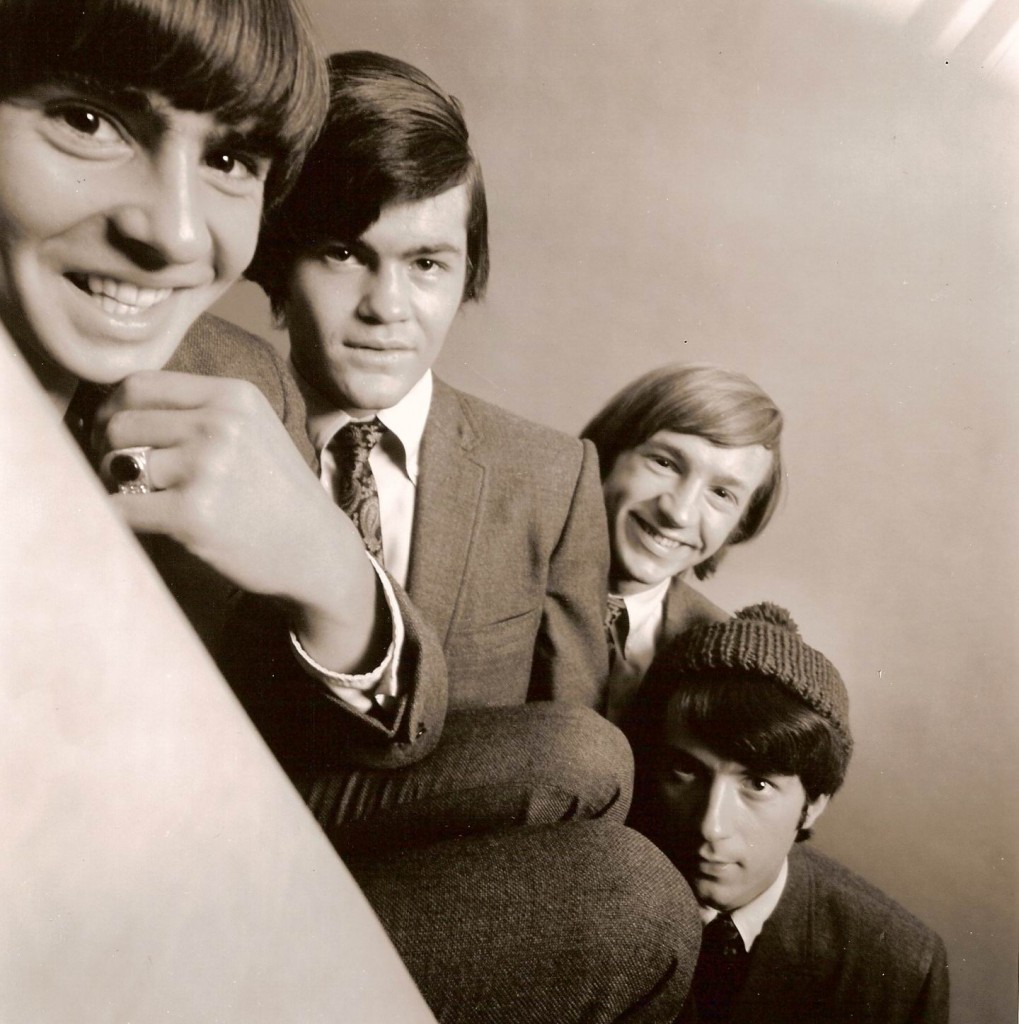
The Monkees, their 50th Anniversary and Why They Deserve to be in the Rock 'n' Roll Hall of Fame


by James Albert Barr

"They've got their own scene, and I won't send them down for it. You try a weekly television show and see if you can manage one half as good!" - John Lennon (who called them the modern Marx Brothers for their ground-breaking antics on their Emmy-award winning T.V. show)


This September will officially mark the 50th anniversary of NBC's launching of The Monkees television show in 1966. To celebrate the occasion, the remaining Monkees reunited, again, and recorded their twelfth album, titled Good Times! Despite the unfortunate loss of the band's resident "heart-throb", Davy Jones, who suddenly passed away in early 2012 from a heart-attack, the new album still features all four original members singing lead-vocals on, at least, one track. The lone track featuring Davy Jones singing, "Love to Love", is a hold-out from a number of sessions dating back to 1967-68. The Neil Diamond-penned tune includes newly recorded backing vocals by both Micky Dolenz and Peter Tork, thus allowing Davy Jones to make a posthumous appearance on Good Times! 

The new Monkees album was released in late-May of this year, just a couple of weeks ago, in fact. The reviews for Good Times! have been surprisingly positive to downright overwhelming in praise. It's "surprising" because the last several Monkees albums, dating from, at least, 1970's Changes to 1996's Justus, had been judged less than favourably, especially 1987's dismal, Pool It!, the first of their, now three, reunion albums. One notable solid review, for the new album, was actually issued by Rolling Stone, a rock magazine known for their viciously criticising, and basically writing-off, the entire Monkees catalogue, aside from their best-of compilations. Rolling Stone gave Good Times! a three-and-a-half star rating, concluding in their glowing review that "Monkee freaks have waited far too long for this album. But it was worth it." If you go by Rolling Stone's most recent edition of their review guide, Good Times! is easily the highest rated Monkees album ever by this "institute of rock journalism". The album is currently sitting at 80% among critics at Metacritic, indicating an average of 4 stars given to it. The U.K.'s Independant even called the album, "probably The Monkees' best album, after their hits compilation". I personally don't agree with that assessment, but I'll come back to that counter opinion a little later. It might, however, be their "second best album".

Unlike '96's Justus, where the band wrote, and played on, every track of that album, Good Times! features song contributions from a very impressive collection of well-known songwriters (and fans of The Monkees), such as Weezer's Rivers Cuomo (who wrote the album's first single, the 60s-evoking and infectious, "She Makes Me Laugh"), XTC's Andy Partridge (contributing the second single, the appropriately sunny and catchy, "You Bring the Summer"), a fantastic collaborative effort from Oasis' Noel Gallagher and The Jam's legendary Paul Weller with the contemporaneously titular and ironically topical, "Birth of an Accidental Hipster"; a progressive sounding song seemingly with both feet straddling the late-60s a la S.F. Sorrow-era Pretty Things and post-millennial Beck a la Sea Change/Morning Phase. There's also a magnificent tune from Death Cab for Cutie's Ben Gibbard, "Me & Magdalena", which appears to be a personal favourite among the fans, including myself. These two latter songs feature impressively affecting lead-vocals from Michael Nesmith, who also sings lead on his own original composition, the simple, yet beautiful and heart-baring, piano-led ballad, "I Know What I Know".

In fact, all three surviving Monkees contributed an original song each on the new album. Besides Nesmith's aforementioned gem, Peter Tork's folky, "Little Girl", may just be the best Monkees song to bear his credit (and his vocals on Goffin & King's, "Wasn't Born to Follow", could be his best vocal performance ever). Okay, Tork's "For Pete's Sake", from Headquarters, and his two numbers featured on Head, are also quite good as well, but I really do love "Little Girl".  And, lastly, there's Micky Dolenz's characteristically upbeat and droll, "I Was There (And I'm Told I Had a Good Time)" to aptly close out the album, which he actually co-wrote with the album's producer, Adam Schlesinger, who also appears on several tracks playing an array of instruments. 

It should be mentioned, too, that The Monkees, themselves, particularly Nesmith and Tork, brought a fair bit of the album's instrumentation to the proverbial table, i.e., studio sessions. That being said, they were indeed supported by a terrific group of musicians that bolstered a very tight and well-produced Monkees album that should date quite well in the future, I feel, unlike, say, the aforementioned, Pool It!, for instance. And, to top it all off, Good Times! has debuted all the way up to #14 on Billboard's Top 200 Album Chart! This signifies the highest a Monkees album has charted since The Birds, The Bees & The Monkees peaked at #3 in 1968. So, all indications say that the new album is both a commercial and critical success. which appears to be a first for this historically, much critically-maligned, bubblegum pop-labelled, "pre-fab four".

And it's unfortunate that The Monkees have had to continually apologize for their "prefabricated and manufactured" origins, when they, actually, became fairly significant musical artists in their own right pretty early in their existence. Yes, Micky Dolenz, Michael Nesmith, Davy Jones and Peter Tork did indeed audition, in 1965, for a new television show that would premiere in September 1966, and become an immediate sensation. The show was created by Bob Rafelson and Bert Schneider after they were inspired by The Beatles' first, iconic film, 1964's A Hard Day's Night. They wanted to re-create the fresh, youthful and crazy spirit of that zeitgeist-establishing film, that came out of England, for American kids, and with a particularly American sensibility.

Chock full of frenetic energy; wacky, zany and downright surreal situations; witty, hilarious banter among the four leads; colourful and imaginative sets, and art direction that screamed of the changing cultural tide, visually and aurally, The Monkees became an instant smash hit on television in the fall of 1966. But even before the show debuted, the band (at least "in name", for now, at the time) already scored a #1 smash hit with "Last Train to Clarksville", having been released a month before the show's first episode aired. The Monkees' self-titled debut album got its official release a few weeks after the show's premiere, hitting #1 a month later and stayed on top of the Billboard charts for thirteen consecutive weeks, right into the second month of 1967, where it was finally displaced by their quick follow-up second album, More of the Monkees. During the 1967 Emmy Awards, The Monkees won Best Comedy Series, as well as Outstanding Directorial Achievement for the show's principal director, James Frawley.

1967 would prove to be one of the most spectacular years any musical outfit would ever have! They started the year off as the biggest thing on television with a hugely popular and critically-acclaimed show, but The Monkees were literally ruling the airwaves and the pop charts as well. They had the #1 album in the U.S. for the first 23 weeks of that year. Their second album was finally dethroned by Herb Alpert and the Tijuana Brass, but then they returned to the nation's top-spot the following week with their third album, Headquarters, which was then replaced by none other than The Beatles' era-defining masterpiece, Sgt. Pepper's Lonely Hearts Club Band. As Sgt. Pepper retained the #1 spot week after week throughout the "Summer of Love", Headquarters held strong by staying at #2 for eleven consecutive weeks. The Monkees would then close out their unbelievable 1967 with yet another smash-hit album, Pisces, Aquarius, Capricorn & Jones Ltd, hitting #1 for the last five weeks of that unforgettable year. 

All together, The Monkees scored four #1 albums in 1967! That is a record no one else has ever equalled. Also, their second album, More of the Monkees, was the best selling album of 1967, giving it the distinction of becoming the very first pop-rock album ever to be the year's best seller, out-selling every other genre of music. As for singles, The Monkees racked up seven Top 40 hits in 1967, including two #1's ("I'm a Believer" and "Daydream Believer"), and two other Top 10s ("A Little Bit Me, a Little Bit You" and "Pleasant Valley Sunday"), and two others that made the Top 20 ("I'm Not Your Stepping Stone" and "Words"), with "Words" narrowly missing the Top 10 by peaking at #11. The seventh Top 40 hit was Michael Nesmith's own "The Girl I Knew Somewhere", which was the B-side to "A Little Bit Me, a Little Bit You", but managed to chart at #39.

The show's premise was that of four struggling musicians trying to "make it" in the music business as a band, living in a two-story beach house in Malibu, California. On the first floor, in the back, overlooking the Pacific Ocean, was an alcove where "the band" kept their instruments and rehearsed. Their attempts to be successful, however, were thwarted week-in and week-out, by "older members" of the establishment. Pretty much immediately after being cast in the show, Peter Tork, and particularly Michael Nesmith, expressed surprise and dismay that their musical talents were not required for the recording of The Monkees' first album. To appease the severity of Nesmith's misgivings concerning his non-invite to the recording sessions, musical director, Don Kirshner, who was hired by the show's producers to lord over the choice of song material and session players, allowed Nesmith to actually contribute two original numbers on the debut album. The only Monkee, however, to appear on the album in the capacity of musicianship, was Peter Tork, who played guitar on two tracks.

Regardless of what Kirshner insisted upon, Michael, Peter, Micky and Davy practiced and rehearsed as a "real band". To everyone else, however, especially music business insiders, critics and actual musicians playing and recording albums, The Monkees were a "fictitious band". This festering frustration finally came to a head after The Monkees had performed several live gigs in front of thousands of their screaming, adoring fans. To their collective surprise and confusion, their second album, More of the Monkees, had already been released, with Kirshner deciding the song selections and sequencing, without their being informed of any of it upon arriving back from their maiden tour. Shortly thereafter, the disgruntled Monkees met with Kirshner and his lawyer, Herb Moelis, at the Beverly Hills Hotel. What, to Kirshner, seemed like a moment of celebration, by rewarding each Monkee with a handsome check for $250,000 for services rendered, in terms of the show's and music's success, quickly deteriorated into a hostile ultimatum led by, of course, Michael Nesmith, who, at this point, could no longer accept his role as a "phony musician" barely even credited on albums bearing his band's/show's namesake. He formally threatened to quit the show if he couldn't actually play on Monkees albums. He punctuated his point by literally punching a hole in the wall of the hotel suite and saying to Moelis, "That could have been your face!", before storming out. 

Though the two less musically-inclined members, Micky and Davy, were hesitant somewhat, they still sided with their band-mates, Peter and Nesmith, to be allowed to play their own music. The show's creators and producers, Bob and Bert, also sided with The Monkees. They officially dismissed Don Kirshner of his duties with The Monkees, and in February of 1967, they finally won their artistic autonomy to play and record, and even choose what songs they wanted on their albums, including writing songs themselves.

The resulting album, Headquarters, was released in May of '67, with half the album's fourteen tracks written by The Monkees themselves. Musically, the now real band, played on every track as well. Though it didn't spawn any big hits in the U.S., they did score a considerable hit in the U.K. with Micky Dolenz's first original song, "Randy Scouse Git" (under the deliberately cheeky alternate title, "Alternate Title", due to its racy connotations to English sensibilities), which just missed hitting the top by peaking at #2. The song's lyrics relayed a series of observations Micky made at a big party The Beatles threw for The Monkees in their honour in London. The album's other famous song is "Shades of Gray". Despite Headquarters lack of hit singles, at least in the States, it still proved to be an excellent collection of songs and yet another #1, which even ebbed the number of hostile reviews they typically received from music critics.

Later that year, The Monkees, despite their exhausting work schedule, regarding the show, which was still doing well, re-entered the studio again to record their third 1967 album. This one was titled Pisces, Aquarius, Capricorn & Jones Ltd, and it would prove to be, in the opinion of many, including myself, their masterpiece. Earlier in the year, Micky Dolenz purchased a newly designed instrument called a Moog synthesizer, a very innovative keyboard, with accompanying transistor panel, that created a fantastic and sense-heightening array of electronic sounds that helped usher in the "psychedelic era" of rock and experimental/avant garde music. The Monkees were one of the first musical acts to employ this instrument's sound in their music, and particularly on Pisces, Aquarius, Capricorn & Jones Ltd. It can be heard on side-two of the record on the album's marvelous closer, "Star Collector", and especially, and most memorably, on one of the album's best tracks, the Nesmith-penned "Daily Nightly". 

This incredible track, and truly one of the most under-rated classics of the psychedelic era, features Micky's outstanding vocals as well as his playing the Moog synthesizer, creating eerie and spacey sounds that instantly enhance his ghostly vocals and Michael's vivid and evocative lyrics, lyrics that recall French symbolist poets like Baudelaire and Rimbaud. One great example comes in the second verse: "Startled eyes that sometimes see phastasmagoric splendour/ Pirouette down palsied paths/ With pennies for the vendor". Each verse ends with the refrain of "Finding questions, but no answers" - a sentiment very much in the ether during those culturally revolutionary, and acutely political, times in the 60s. "Daily Nightly" is The Monkees' "Tomorrow Never Knows", and it heralded the likes of great, yet undervalued psychedelic classics like The United States of America's "The American Metaphysical Circus" and Elephant's Memory's "Old Man Willow".


The Monkees' fourth album was replete with one great track after another. It has no filler at all, and puts on display some of the best stuff any individual Monkee had ever contributed. Davy Jones, whose vocals weren't exactly the strongest and most versatile, here gives his best vocal performances on any Monkees album, in my opinion, showing a range he hadn't accomplished before or after. And the best Monkee song with his name in the credits, the admittedly mellifluous, but undeniably pretty, "Hard to Believe" amply shows the atypical strength of his vocals on this magnificent album, as does the rollicking rocker, the aforementioned album closer, "Star Collector", which was written by the great song-writing team of Goffin and King. True, The Monkees did resort back some to outside writers for much of this album's material, but it was still chosen by themselves and played to a large extent by themselves, with assistance from session players. Pisces also features Michael Nesmith's vocals more prominently than any other Monkees album, with him singing lead on five tracks, including album highlight "Love is Only Sleeping", a spectacular rocker that also features his incredibly catchy, garage-rock guitar riff that runs through the entire song. It could have been a single, I feel. And perhaps more importantly, there is his performance on Murphey and Castleman's "What Am I Doing Hangin' 'Round?", one of the first bona fide "country-rock" tunes to appear on record before The Byrds officially established the sub-genre the next year with their now classic Sweetheart of the Rodeo album. 

Of course, the two most famous songs on Pisces, and its two biggest hits, are the cheerfully cynical, suburban apathy-exposing "Pleasant Valley Sunday" and the moody and sensual "Words", both highlighting the truly remarkable vocals of Micky Dolenz, who really was gifted with one of the best singing voices in all of rock and popdom. Other favourites are the insidiously catchy bubblegum pop of "She Hangs Out", with its subversive lyrics suggesting sexual promiscuity, the rock solid Nesmith-sung "The Door into Summer", and his other self-penned contribution, the classy and gorgeously loungey, "Don't Call on Me", and, finally, one of Harry Nilsson's first songs to be recorded, "Cuddly Bear", which Davy sings with understated gusto and irresistible charm. Even Peter's lone lead vocal on the half minute long "Peter Percival Patterson's Pet Pig Porky" is an ear-arresting vignette straight out of a drug-induced daydream,...believe it! Pisces, Aquarius, Capricorn & Jones Ltd is quite simply one of the finest albums of the 1960s, period.

In the spring of 1968 The Monkees television show was cancelled after two solid seasons. The band refused to continue with the same formula, and instead opted for a motion-picture to be made called Head. A project they had been discussing with relative unknown, at the time, Jack Nicholson, actually. The film's premise would be the antithesis of what their show presented, and truly test the patience of both the show's young demographic and critics alike. Before that, however, they released what would be their last "hit album", The Birds, The Bees & The Monkees. By this time the band had pretty much reverted back to using session musicians on most of the tracks, although they still wrote at least half of the album's songs themselves. However, much like The Beatles did on "The White Album", each Monkee focused exclusively on their own numbers, injecting their own musical style on their respective productions, eschewing with any real sense of a "united band dynamic", for better or worse. Still, the resulting product was a mostly good, if uneven, collection of songs which had among them the last two significant hits The Monkees would enjoy, the schmaltzy, but much beloved, "Daydream Believer", and the spirited rocker, "Valleri". Nesmith's tremendous "Tapioca Tundra" also appears on The Birds, and even charted at #34 to boot.

With the show now gone, and their popularity on a discernible downturn, The Monkees, with Jack Nicholson co-writing the script and co-producing the film, focused on Head's production. The dark and surreal tone of the film, which begins with a prototypical Lynchian scene of an awkward ceremonial opening of a bridge, where an exasperated city mayor is futilely fighting off feedback from his microphone, hindering him from declaring the bridge open and cutting the ceremonial ribbon. When he finally gets his speech out of the way and is about to cut said ribbon, The Monkees suddenly show up and run right past everyone attending the ceremony and running through the ribbon before the mayor has a chance to cut it. They are apparently being chased, and so they run right to the edge of the bridge when suddenly Micky jumps off it and into the water hundreds of feet below. Then the film's theme song, "Porpoise Song" begins as Micky struggles to swim within the water's depths. He's then suddenly saved by, yup, a couple of mermaids. 

From there, the film follows The Monkees through a series of bizarre scenes of disorientation and frustration with the situation they find themselves in, and the questionable state of their career, evidently; continually getting themselves trapped inside a large metal box, only to escape momentarily and then captured again, before ending, like a Moebius-strip, at the beginning, disrupting the bridge ceremony and jumping off it together. The affecting symbolism of their being mere, exploited puppets for the soulless and superficial entertainment industry, while the Vietnam war is happening and 60s culture appears to be reaching an apogee of sorts, is not impossible to extract from Head, despite the film's nonlinear, peculiar narrative. I think it's a film that can be better appreciated with its historical context more fully fleshed-out and realised with hindsight. The soundtrack is also one of the band's most adventurous and rewarding listens. Rolling Stone even placed it in their Top 25 soundtracks of all time, further suggesting that they seem to be finally coming around to acknowledging The Monkees' tenable quality and historical significance.

After Head bombed completely at the box-office, and the soundtrack only managed to crack the Top 50 on Billboard's album chart, Peter Tork left the band. The three remaining members recorded two 1969 albums of ever more diminishing returns: Instant Replay and The Monkees Present (which does feature Michael's classic, "Listen to the Band"). Michael Nesmith did not participate on the band's final album, Changes (a contractual obligation album for all intents and purposes), before Micky and Davy put The Monkees out of their misery, as they were quite irrelevant by that time, sadly. Sixteen years later, however, in 1986, and much to their collective surprise, Monkeemania returned when MTV aired all 58 episodes of their once celebrated show, prompting a new generation of fans clamouring for new Monkees activity. It, understandably, brought the band back together, minus Michael Nesmith (who was doing rather fine, financially, at that time, when he inherited his mother's fortune of some 50 million dollars, having invented "liquid paper"), and so they recorded three new songs which were included on a new Monkees best-of compilation, Then and Now...The Best of The Monkees. They even scored a Top 20 hit with "That Was Then, This Is Now". Unfortunately, they couldn't sustain the momentum when they released the godawful Pool It! album in 1987.

For their 30th Anniversary, the entire band reconvened in 1996 and recorded a brand new album of all original material written by them, and also featuring no other musicians but themselves on every track. The result was the much-improved Justus album. However, unlike a decade earlier, there wasn't the same kind of reception by the record buying public, and so Justus became the first and only Monkees album to fail to chart. But now with the band's 50th Anniversary arriving this year, and the release of the truly wonderful Good Times! album, and its accompanying commercial and critical success, The Monkees are being afforded an opportunity to go out in style. They were eligible for the Rock and Roll Hall of Fame 25 years ago, and I think, with this new record being one of the band's finest, and the undeniable legacy that refuses to fade away, and given all that they have accomplished in those 50 years, they should finally be inducted. They clearly have a rich cache of classic hits that, to this day, are played every day on the radio, and have at least four albums that merit serious critical and artistic accolades and continuous admiration: Headquarters; Pisces, Aquarius, Capricorn & Jones Ltd; Head and Good Times! There have definitely been artists that have made the Hall of Fame (Kiss, anyone?) with less impressive accomplishments, at least in my opinion. At last, I say give The Monkees their most-deserved due.